
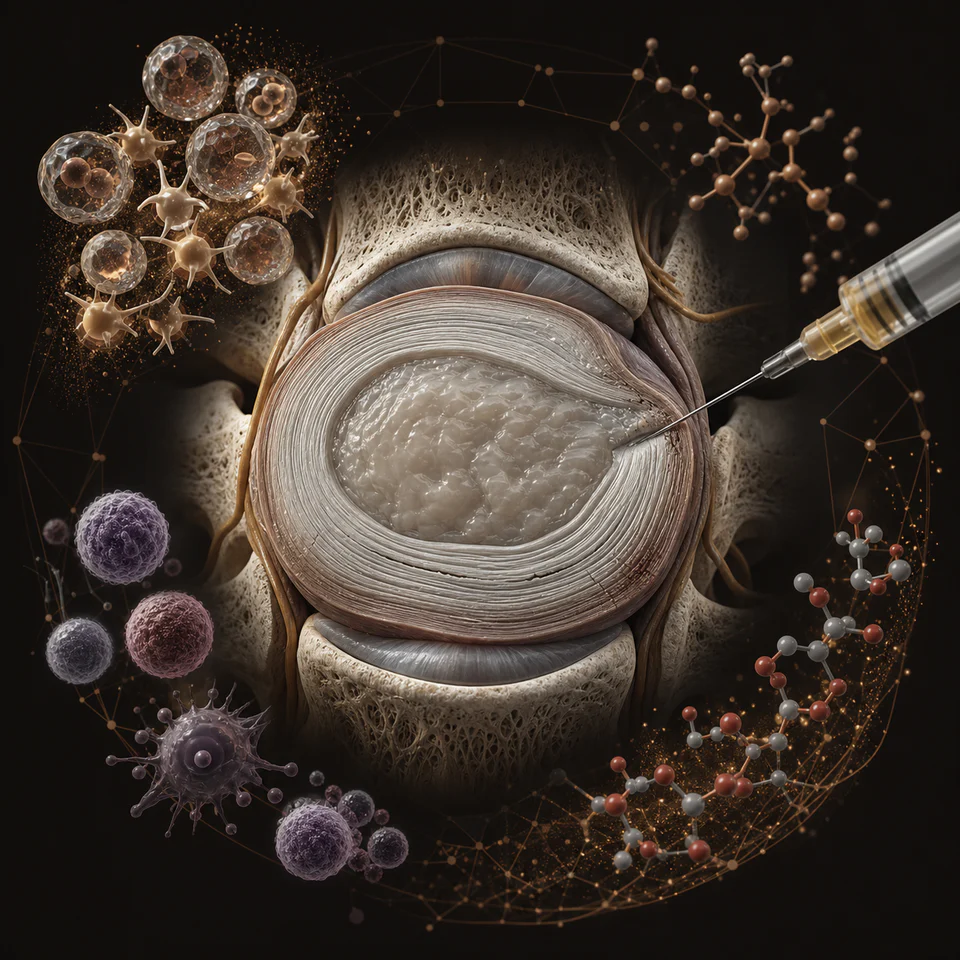
Biologic, cellular, and peptide therapies are part of the broader conversation at Bhamb Spine for selected patients exploring non-surgical ways to address a diagnosed source of spine pain.
Biologic, PRP & Peptide Therapies Q&A
What is PRP?
Platelet-rich plasma, or PRP, is prepared from a patient’s own blood and concentrates platelets and their signaling proteins. In spine care, PRP has been studied in small trials as an intradiscal treatment and as an epidural or transforaminal injection for selected disc-related pain and radicular symptoms.
What do the PRP studies show?
Early pilot studies and small randomized trials report signals of symptom improvement in some patients, but the findings are mixed. One randomized intradiscal trial found no significant advantage at 12 months, while other small studies reported improvement after selected intradiscal or epidural applications. PRP remains an evolving treatment rather than a proven substitute for established care.
How are peptide therapies different?
Peptides are short chains of amino acids used or proposed to influence biologic signaling. For non-surgical spine treatment, human clinical evidence remains very limited, and many marketed peptide therapies have not been established in high-quality spine trials. Any peptide discussion at Bhamb Spine is individualized, evidence-aware, and presented as investigational rather than as a guaranteed regenerative treatment.
What other cellular options may be discussed?
Stem-cell and other cellular approaches are also evaluated according to the specific diagnosis, available evidence, prior treatment, imaging, health history, and the patient’s goals. The source and preparation of a product, regulatory status, and realistic objective should be understood before treatment is considered.
Who may be a candidate?
Candidacy is individualized. These therapies cannot correct deformity or instability and are not a substitute for urgent surgical care when neurologic function, spinal stability, infection, tumor, or another serious concern requires intervention.
A consultation is used to review the evidence, uncertainties, alternatives, and whether a non-surgical or surgical pathway is most appropriate.