
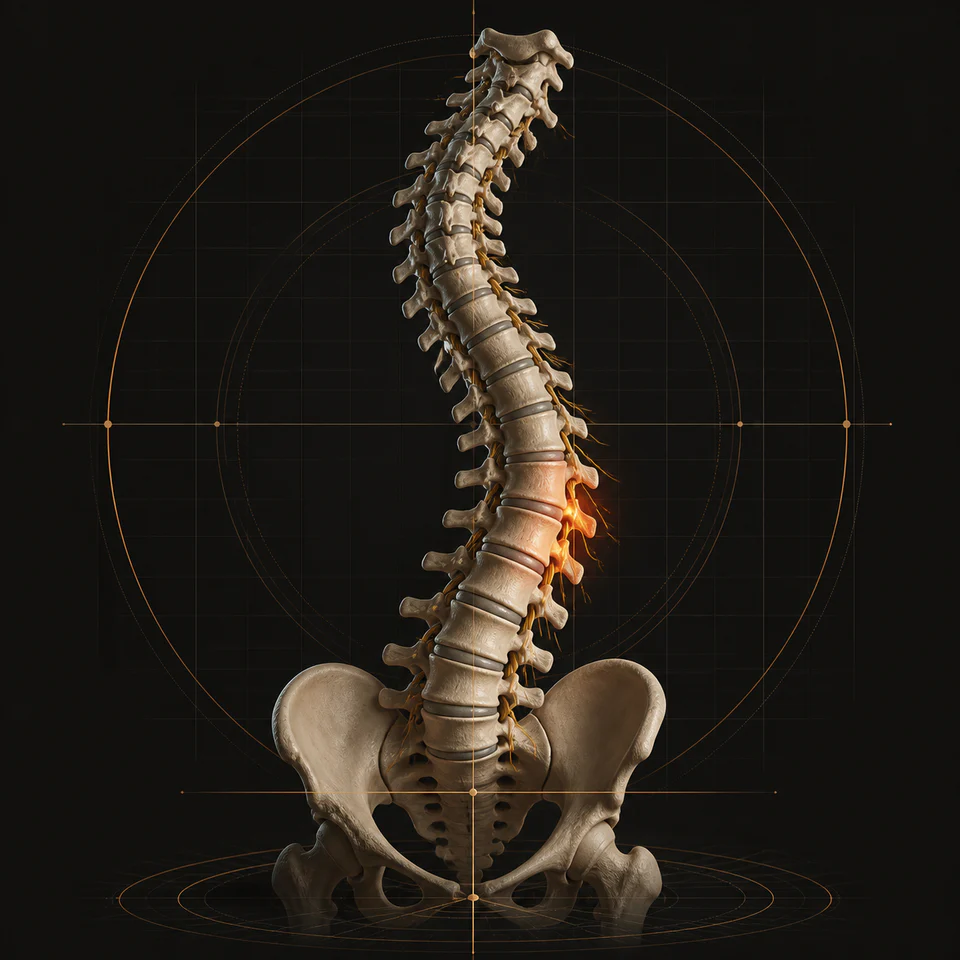
Adult scoliosis can cause back pain, fatigue, loss of standing tolerance, imbalance, foraminal narrowing, or radiating nerve symptoms. Treatment is based on the symptoms, neurologic findings, alignment, stability, and levels involved - not the curve measurement alone.
Adult Scoliosis Q&A
Does every adult with scoliosis need a full correction and fusion?
No. A full scoliosis reconstruction may be appropriate for severe imbalance, progressive deformity, instability, or symptoms that cannot be addressed safely with a limited approach. For selected adults with a compensated curve and a focal source of pain or nerve compression, symptom-focused treatment may improve function without a full-length correction fusion.
What minimally invasive options may help?
Depending on the anatomy and symptoms, a focused plan may include:
- Endoscopic or minimally invasive decompression
- Laminotomy or foraminotomy around a compressed nerve
- Targeted treatment of a symptomatic disc or level
- Limited stabilization only when instability requires it
These limited procedures are intended to address a specific pain generator or compressed nerve. They do not straighten the entire curve, and careful patient selection is essential.
Can biologic treatment be part of adult scoliosis care?
PRP or another carefully selected orthobiologic option may be discussed for certain pain generators, alongside rehabilitation and other non-surgical care. Biologic treatment cannot straighten scoliosis or replace decompression or stabilization when progressive neurologic loss, instability, or severe deformity requires surgery.
How is the right pathway selected?
Dr. Bhamb reviews standing imaging, neurologic symptoms, spinal balance, bone quality, prior treatment, health history, and personal goals before recommending observation, rehabilitation, a targeted injection or biologic discussion, limited minimally invasive surgery, or a larger reconstruction.